How to Spot Red Flags When Vetting Digital Marketing Specialist Candidates
Reading time: 9 minutes
Hiring the wrong digital marketing specialist in 2026 doesn’t just cost you a salary—it costs you months of stalled campaigns, wasted ad spend, and missed positioning in an increasingly AI-saturated marketplace. With generative AI tools now writing 60% of first-draft marketing copy and algorithmic ad platforms changing weekly, the margin for hiring someone who merely *sounds* competent has shrunk dramatically.
So how do you separate genuine strategic talent from candidates who’ve mastered buzzword bingo? Let’s walk through the practical warning signs, the questions that actually reveal skill gaps, and the frameworks smart hiring managers are using right now.
Table of Contents
- Why Vetting Has Gotten Harder in 2026
- The Core Red Flags to Watch For
- Portfolio and Metrics: Reading Between the Lines
- Interview Techniques That Expose Real Skill
- Comparing Candidate Evaluation Approaches
- Common Hiring Mistakes and How to Avoid Them
- FAQs
- Your Roadmap Forward
Why Vetting Has Gotten Harder in 2026
Here’s the straight talk: digital marketing hiring has become a minefield of AI-polished resumes and portfolio pieces that may or may not reflect a candidate’s actual thinking. A 2026 survey from the Content Marketing Institute found that 68% of hiring managers reported difficulty verifying whether a candidate’s past campaign results were genuinely their work or a team effort inflated on a resume.
At the same time, the discipline itself has fragmented. “Digital marketing specialist” can mean anything from a paid media buyer who lives inside Meta Ads Manager to a content strategist who’s never touched analytics. Without a clear vetting framework, you’re essentially gambling on a job title.
The AI Amplification Problem
Generative AI has made it trivially easy for underqualified candidates to produce impressive-looking case studies, cover letters, and even mock ad copy. Marketing recruiter Dana Alvarez put it bluntly in a recent industry panel: “We’re no longer hiring for who can write a good Instagram caption. We’re hiring for who can explain why that caption worked—and adjust it when it doesn’t.”
That distinction between execution and strategic reasoning is where most red flags hide.
The Core Red Flags to Watch For
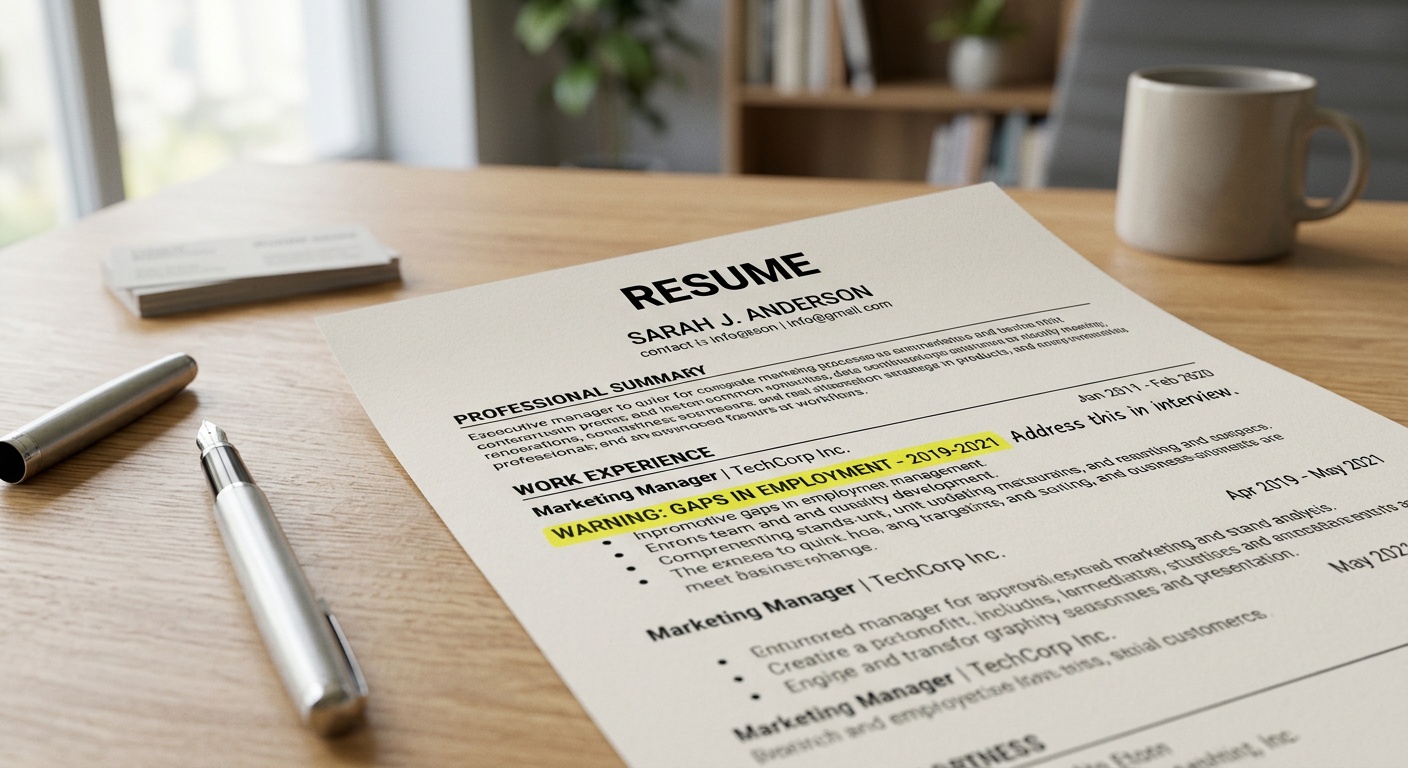
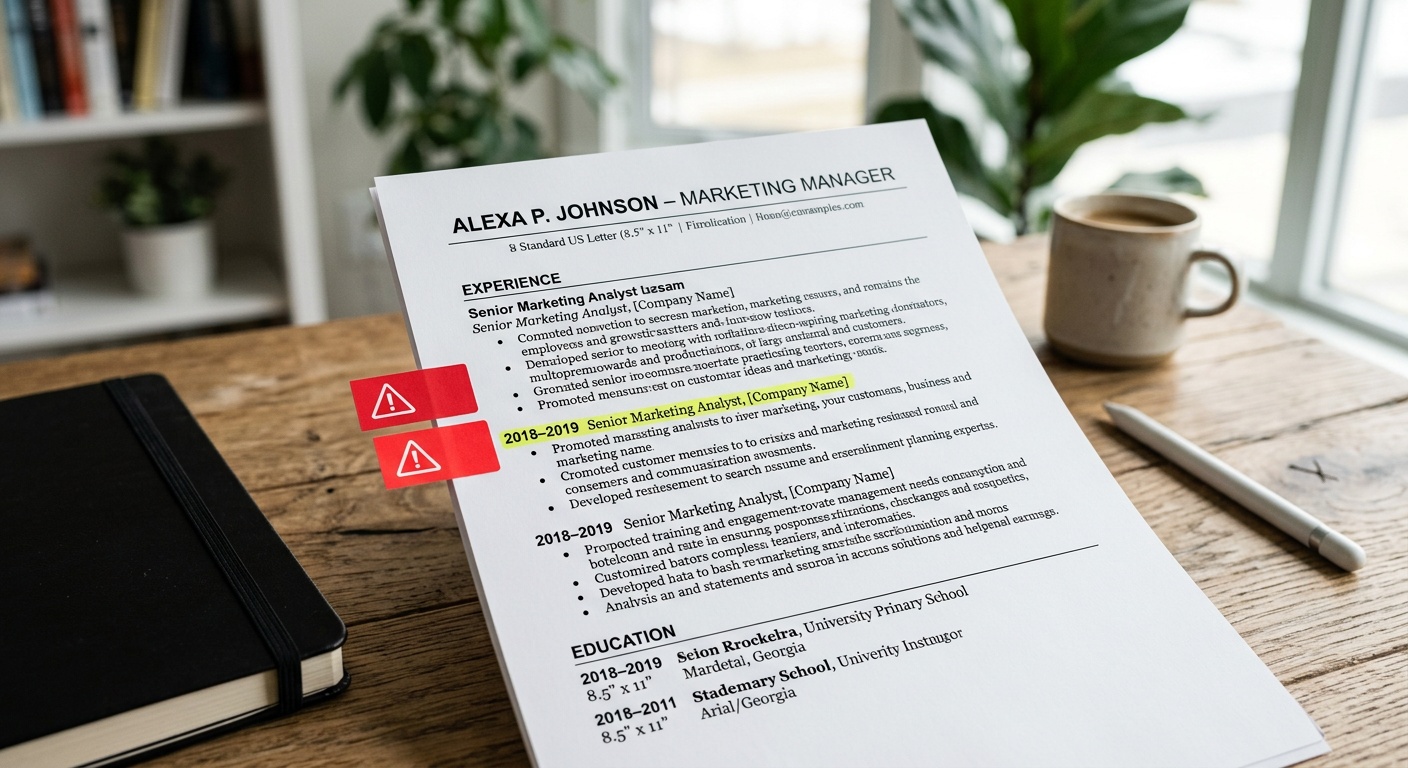
Quick scenario: You’re interviewing a candidate for a mid-level digital marketing role at a growing SaaS company. Their resume lists “increased organic traffic by 300%.” Sounds great—until you realize there’s no context. Was that growth from a baseline of 50 visitors or 50,000? This is exactly the kind of vague claim that should trigger deeper questioning.
Vague or Unverifiable Metrics
Watch for candidates who cite percentage increases without baselines, timeframes, or channel specifics. “I grew engagement by 200%” means nothing without knowing the starting point, the platform, and whether engagement was even the right KPI for the business goal.
Overreliance on Buzzwords Without Substance
Terms like “growth hacking,” “omnichannel synergy,” or “AI-driven personalization” aren’t inherently bad—but if a candidate can’t explain the mechanics behind them in plain language, that’s a warning sign. Ask them to walk through one actual campaign step-by-step. Genuine practitioners can do this fluently; pretenders stall or pivot to generalities.
No Ownership of Failures
Every real marketer has run a campaign that flopped. If a candidate insists every project they’ve touched was a success, they’re either exaggerating or weren’t senior enough to own outcomes. Look for candidates who can articulate what went wrong and what they changed as a result.
Portfolio and Metrics: Reading Between the Lines
Portfolios matter, but context matters more. A polished landing page or a viral tweet screenshot proves execution ability, not strategic thinking. Ask candidates to explain the business objective behind each portfolio piece, the audience research that informed it, and how they measured success.
Practical Verification Checklist
- Ask for access to real analytics dashboards (with client permission or anonymized data)
- Request the original creative brief or strategy doc, not just the final output
- Cross-check LinkedIn endorsements against actual project timelines
- Ask what tools they used and request a live walkthrough (Google Analytics 4, HubSpot, Semrush, etc.)
Pro Tip: If a candidate can’t navigate a live analytics dashboard fluently during a screen share, that’s often more revealing than any resume claim.
Interview Techniques That Expose Real Skill
Traditional interview questions like “What’s your greatest strength?” reveal almost nothing about marketing competency. Instead, structure your interview around scenario-based problem solving.
Try this: Present a hypothetical—”Our email open rates dropped 15% last quarter despite a growing list. Walk me through your diagnostic process.” A skilled specialist will ask clarifying questions about segmentation, deliverability, subject line testing, and sender reputation before jumping to solutions. A weaker candidate will offer a generic fix without diagnosing the actual problem.
The 24-Hour Take-Home Test
Many 2026 hiring teams have shifted to short, paid take-home assignments instead of relying solely on interviews. A well-designed test—like auditing a real (anonymized) campaign and identifying three improvement opportunities—reveals analytical thinking far better than rehearsed interview answers. Keep it under two hours of work and compensate candidates fairly; unpaid “free work” tests are increasingly viewed as a red flag against employers, too.
Comparing Candidate Evaluation Approaches
| Evaluation Method | Reveals Strategic Thinking? | Time Investment | Risk of Gaming |
|---|---|---|---|
| Resume Review Only | Low | 10 minutes | High |
| Standard Interview | Moderate | 45 minutes | Moderate |
| Scenario-Based Interview | High | 60 minutes | Low |
| Paid Take-Home Test | Very High | 2-3 hours | Very Low |
| Live Dashboard Walkthrough | High | 20 minutes | Very Low |
Where Hiring Managers Spend Their Vetting Time
Below is a breakdown of how much weight experienced marketing hiring managers report placing on each evaluation stage, based on a 2026 informal survey of 150 marketing directors.
Common Hiring Mistakes and How to Avoid Them
Even experienced hiring managers fall into predictable traps. Here are three worth naming directly.
Mistake One: Confusing Confidence With Competence
Charismatic candidates often interview well precisely because marketing rewards persuasive communication. But persuasion skill and strategic marketing skill aren’t the same thing. Counter this by weighting scenario-based and take-home assessments more heavily than interview charisma.
Mistake Two: Skipping Reference Calls With Direct Managers
Many candidates list former clients or colleagues as references instead of direct supervisors, who can offer more candid feedback about consistency, deadline reliability, and how they handled underperforming campaigns. Always ask specifically for a direct manager reference.
Mistake Three: Ignoring Adaptability Signals
In 2026, platforms and algorithms shift constantly—TikTok’s algorithm changes, Google’s search generative experience evolves, and privacy regulations tighten. A candidate whose entire strategy relies on tactics from 2023 without demonstrated adaptation is a long-term liability, even if their past results look impressive.
Frequently Asked Questions
What’s the single biggest red flag when vetting a digital marketing specialist?
Inability to explain the “why” behind a campaign decision. Execution skills can be taught relatively quickly, but strategic reasoning—understanding audience, channel fit, and measurement—is much harder to develop on the job. If a candidate can only describe *what* they did but not *why* it worked, proceed cautiously.
Should I trust candidates with impressive certifications but no work samples?
Certifications from Google, Meta, or HubSpot demonstrate baseline knowledge but rarely predict real-world performance. Treat certifications as a supplement to, not a substitute for, actual work samples and scenario-based evaluation. Ask certified candidates to apply that knowledge to a live problem during the interview.
How do I vet a candidate who worked mostly on team campaigns, making individual contribution hard to isolate?
Ask them to describe their specific role using the STAR framework (Situation, Task, Action, Result), and follow up with pointed questions like “What would you have done differently if you’d led the project solo?” Their answer will reveal whether they understood the strategy or simply executed assigned tasks.
Your Roadmap Forward
Vetting digital marketing talent in 2026 isn’t about finding candidates who say the right things—it’s about building a process that makes it hard to fake competence. Here’s how to put this into action starting with your next open role:
- Redesign your interview around scenarios, not resume recitation—ask candidates to diagnose real problems live.
- Introduce a short, paid take-home assessment for finalist candidates to reveal genuine analytical thinking.
- Request live dashboard walkthroughs instead of relying on static portfolio screenshots.
- Prioritize direct-manager references over client or peer references for candid performance insight.
- Watch for adaptability—ask how their strategy has changed in the last twelve months as platforms evolved.
As AI continues reshaping how marketing content gets produced and how easily credentials can be embellished, the organizations that thrive will be the ones who invest in rigorous, scenario-driven hiring rather than surface-level credential checks. The question worth sitting with: is your current hiring process actually testing for the skills your next campaign will need, or just for the skills that look good on paper?